In an increasingly interconnected world, the way we prove our identity is undergoing a significant transformation. Traditional physical documents are gradually giving way to digital IDs, heralding a new era of secure and convenient identification. But what exactly are digital IDs, and how are they reshaping our interactions with various services and institutions? This article delves into the world of digital IDs, exploring their benefits, diverse applications, and the pivotal role of compliant photos in powering this future of identification.
Digital IDs are electronic representations of an individual's identity, stored and managed digitally. Unlike physical documents, which can be easily lost, stolen, or forged, digital IDs offer a more secure and verifiable means of identification. They are typically stored on smartphones, secure servers, or other digital devices and leverage advanced technologies to ensure authenticity and prevent fraud.
The Technology Behind Digital IDs
Several key technologies underpin the functionality of digital IDs:
*
Biometrics: Digital IDs often incorporate biometric data, such as facial recognition, fingerprint scanning, or iris scanning, to uniquely identify individuals and prevent identity theft. This ensures a high level of accuracy and security.
*
Encryption: Encryption algorithms are used to protect sensitive information stored within digital IDs, ensuring that only authorized parties can access and decrypt the data. Strong encryption is vital for maintaining user privacy.
*
Blockchain: Some digital ID systems leverage blockchain technology to create a decentralized and tamper-proof record of identity information, enhancing security and transparency. This distributed ledger system adds an extra layer of trust.
*
Near Field Communication (NFC): NFC technology enables contactless communication between digital IDs and verification devices, allowing for quick and seamless identity verification. This is commonly used for quick access and secure payments.
Digital IDs offer a multitude of advantages over traditional physical documents, making them increasingly attractive for various applications:
*
Enhanced Security: Digital IDs are more resistant to fraud and tampering compared to physical documents, thanks to the use of biometrics, encryption, and blockchain technology. This reduces the risk of identity theft and misuse.
*
Increased Convenience: Digital IDs eliminate the need to carry physical documents, making it easier and more convenient to prove one's identity in various situations. Imagine accessing services with just your smartphone!
*
Reduced Fraud: Digital ID systems can help prevent identity theft and fraud by providing a secure and verifiable means of authentication. This protects both individuals and organizations from financial losses.
*
Environmental Benefits: By reducing the reliance on paper-based documents, digital IDs contribute to environmental sustainability. This aligns with global efforts to reduce waste and conserve resources.
*
Improved Efficiency: Digital IDs can streamline various processes, such as online transactions, border control, and access control, saving time and resources. This leads to faster service and reduced administrative burden.
Digital IDs are finding applications in a wide range of industries and sectors, transforming how we interact with services and institutions:
*
Online Identity Verification: Digital IDs enable secure and reliable online identity verification for banking, e-commerce, and government services, reducing the risk of fraud and identity theft. Secure your online presence with a verified digital ID.
*
Access Control: Digital IDs can be used to control access to buildings, events, and restricted areas, enhancing security and preventing unauthorized entry. Control who enters your space with digital precision.
*
Healthcare Record Management: Digital IDs facilitate secure and efficient management of healthcare records, allowing patients to easily access their medical information and share it with healthcare providers. Manage your health information with ease and security.
*
Digital Signatures and Secure Transactions: Digital IDs enable the creation of legally binding digital signatures and facilitate secure online transactions, promoting trust and confidence in the digital marketplace. Sign documents securely from anywhere.
*
Travel and Border Control: Digital travel credentials (DTCs) are emerging, enabling faster and more secure border crossings. These rely on highly secure, verifiable digital identities.
While the format and storage of digital IDs differ from traditional documents, the fundamental requirements for a compliant photo remain essential. A high-quality, biometric-ready photo is crucial for accurate and reliable digital ID verification.
The Importance of High-Quality, Biometric-Ready Photos
Biometric facial recognition systems rely on specific facial features and measurements to verify identity. A compliant photo ensures that these features are clearly visible and accurately captured, enabling the system to perform effectively. Key requirements include:
*
Proper Lighting: Even and consistent lighting is crucial to avoid shadows or glare that can obscure facial features. Use natural light or a well-lit room.
*
Neutral Expression: A neutral facial expression with eyes open and mouth closed is required for accurate biometric analysis. Avoid smiling, frowning, or making other expressions.
*
Clear Background: A plain, light-colored background ensures that the face is the primary focus of the image. Use a white or off-white wall.
*
Correct Size and Resolution: Digital ID photos must meet specific size and resolution requirements to ensure compatibility with verification systems. Check the specifications for your particular digital ID.
*
No Obstructions: Ensure that hair, accessories, or clothing do not obscure any part of your face. For specific guidelines, refer to our article on
hair requirements for passport photos, which also apply to many digital IDs.
AI-powered tools, such as
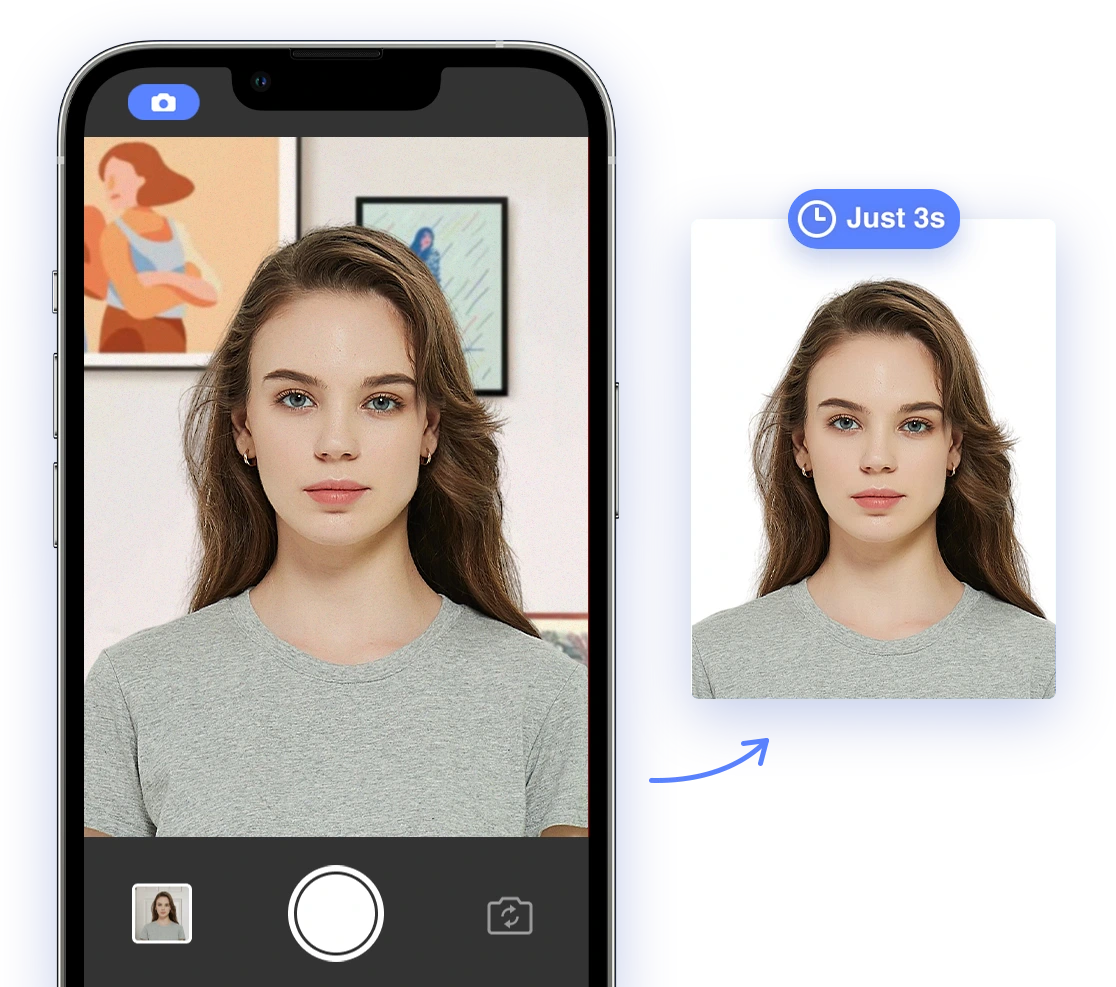
AI Passport Photo, can assist users in creating compliant photos for digital ID applications. These tools automatically analyze photos, identify potential issues, and provide guidance on how to improve the image to meet official requirements. For example, they adjust brightness, contrast, crop the photo to the correct dimensions, and verify background color. This makes the process simple and error-free.
Furthermore, if you're unsure whether to retouch your photo, see our guide on
passport photo retouching.
Common Mistakes to Avoid
Submitting a non-compliant photo is a common reason for digital ID application delays or rejections. Here are some frequent errors to avoid:
*
Poor Lighting: Avoid taking photos in dimly lit environments or with harsh shadows. Ensure even lighting across your face.
*
Incorrect Posing: Ensure that you are facing the camera directly with a neutral expression. Avoid tilting your head or looking away.
*
Busy Backgrounds: Choose a plain, light-colored background to avoid distractions. Remove any objects from the background.
*
Wearing Accessories: Remove any accessories that may obstruct your face, such as hats, sunglasses, or excessive jewelry. Keep it simple.
*
Low Resolution: Use a high-resolution camera to ensure a clear and detailed image. Avoid blurry or pixelated photos.
Ready to create a compliant photo for your digital ID? Try AI Passport Photo today!
Several countries and regions are at the forefront of digital ID implementation, paving the way for a more secure and efficient future:
*
European Union (EU): The
EU is developing a digital identity wallet that will allow citizens to securely access online services across member states. This initiative aims to create a unified digital identity framework across Europe.
*
Estonia: Estonia has pioneered the use of digital IDs for a wide range of services, including voting, banking, and healthcare. Often called a digital society, Estonia showcases the potential of widespread digital ID adoption.
*
India: India's Aadhaar system provides biometric-based digital IDs to over a billion residents, enabling access to government services and financial inclusion. This is one of the largest biometric ID systems in the world.
*
Singapore: Singapore's SingPass system provides citizens with a secure digital identity for accessing government and private sector services. Singapore is known for its advanced digital infrastructure.
Digital IDs have the potential to revolutionize how we prove our identity and access services in the years to come. As technology advances and security needs evolve, we can expect to see even more innovative applications of digital IDs, including:
*
Decentralized Identity Systems: Blockchain-based identity systems that empower individuals to control their own identity data. This increases user privacy and security.
*
Self-Sovereign Identity (SSI): SSI solutions that allow individuals to create and manage their own digital identities without relying on centralized authorities. This promotes individual autonomy and control.
*
Biometric Authentication: More sophisticated biometric authentication methods, such as vein recognition and voice recognition, that enhance security and convenience. These technologies are becoming increasingly accurate and reliable.
*
Integration with the Metaverse: Digital IDs that enable seamless identity verification and access to services within virtual worlds and the metaverse. This opens up new possibilities for digital interaction and commerce.
Embrace the future of identification with secure and convenient digital IDs!
AI Passport Photo simplifies the process of creating compliant photos for various types of Digital IDs. Using AI-powered tools, the platform helps users to automatically verify background, facial expression, and dimensions, ensuring that the created photo meets the specific requirements for your chosen Digital ID. With a stellar 4.6 rating on
Trustpilot, this app allows you to easily capture digital photos with your smartphone, making the ID application process faster and more convenient than ever before.
Get started with AI Passport Photo and create your compliant digital ID photo today!
By understanding the technology, benefits, and requirements of digital IDs, individuals and organizations can prepare for a future where digital identity plays an increasingly important role in our lives.
 AiPassportPhoto