Understanding USCIS Document Photo Requirements
The United States Citizenship and Immigration Services (USCIS) requires specific photo IDs for various applications. Failing to meet these requirements can lead to delays or even rejection of your application. Here's a breakdown of the photo requirements for common USCIS documents:
Green Card Photos: Specifics for Initial Applications and Renewals
Your green card, or Permanent Resident Card, is a crucial document that allows you to live and work permanently in the United States. Both the initial application and renewal process require you to submit a photo that adheres to strict guidelines. It's essential to get these right from the start to avoid processing delays. If you're looking to renew, see our guide on
Green Card Holder travel without visa.
- Number of Photos: Two (2) identical photos are generally required.
- Photo Size: 2x2 inches (51x51 mm).
- Color: Must be in color, not black and white.
- Background: The background must be white and devoid of any patterns or shadows. A plain white background is crucial.
- Head Size: The head should measure between 1 inch and 1 3/8 inches (25 mm and 35 mm) from the top of the head to the bottom of the chin. Proper head size is a key factor for acceptance.
- Pose: You must face the camera directly with a neutral facial expression (no smiling, frowning, or squinting). A neutral expression helps with biometric identification. For tips on how to achieve the best results, see our guide on how to get the best passport photos.
- Attire: Avoid wearing eyeglasses (unless medically necessary, with a signed statement from a doctor), hats, or head coverings (unless required for religious reasons, with a signed statement). Keep attire simple and avoid anything that obstructs facial features. For more information, check our guide on Passport Photo Dress Code.
- Recency: Photos must be recent, taken within the last six months. Recent photos ensure accurate identification.
Employment Authorization Document (EAD) Photos
If you're authorized to work in the United States on a temporary basis, you'll likely need an Employment Authorization Document (EAD). The photo requirements for an EAD are similar to those for a green card, simplifying the process if you've already applied for one.
- Number of Photos: Two (2) identical photos are generally required.
- Photo Size: 2x2 inches (51x51 mm).
- Color: Must be in color.
- Background: White and free of distractions. A clear, uncluttered background is necessary.
- Head Size: Same as green card photos.
- Pose: Face the camera directly with a neutral expression.
- Attire: Same as green card photos. Ensure no accessories obstruct your face.
- Recency: Photos must be recent, taken within the last six months. Use a recently taken photo for accurate representation.
Naturalization/Citizenship Photos: Meeting USCIS Standards for N-400 Applications
Applying for US citizenship is a significant milestone. The photo requirements for the N-400 application (Application for Naturalization) are, again, largely the same as those for green cards and EADs, making the process consistent. For those eligible, see our guide on
joining military service with a green card.
- Number of Photos: Two (2) identical photos are generally required.
- Photo Size: 2x2 inches (51x51 mm).
- Color: Must be in color.
- Background: White. A plain white background is mandatory.
- Head Size: Same as green card photos. Accurate head size is essential.
- Pose: Neutral expression, facing the camera directly.
- Attire: Same as green card photos. Adhere to the attire guidelines to avoid rejection.
- Recency: Taken within the last six months. Use photos taken recently to reflect your current appearance.
It's crucial to consult the official
USCIS website or application instructions for the most up-to-date requirements, as these can change. Rely on official sources to stay informed.
Navigating State-Issued ID Photo Requirements
Beyond federal documents, non-US citizens often need state-issued identification, such as driver's licenses or state ID cards. Requirements vary by state, so it's vital to check with your local Department of Motor Vehicles (DMV) or equivalent agency. Each state has its own specific rules, so research is critical.
Driver's Licenses and REAL ID: Varied State Requirements and How to Ensure Compliance
Getting a driver's license allows you to legally operate a vehicle in the United States. The REAL ID Act establishes minimum security standards for state-issued driver's licenses and identification cards, which are accepted for certain federal purposes, such as boarding domestic flights. Note that REAL ID compliance may affect photo requirements. To find out if deaf drivers qualify, check our guide on
Requirements for Deaf Driver's License
- Photo Size: While 2x2 inches is common, some states may have slightly different size requirements. Check your local DMV's guidelines.
- Color: Typically, color photos are required. Black and white photos are generally not accepted.
- Background: Often a plain, light-colored (usually white or off-white) background is needed. A consistent background is generally required.
- Pose: Face forward with a neutral expression. Direct face and neutral pose are essential.
- Attire: Eyeglasses are generally prohibited unless medically necessary. Hats and head coverings are usually not allowed unless worn for religious reasons. Adhere to the specified attire rules.
To ensure compliance, visit your state's DMV website for specific instructions and consider using an AI-powered tool to verify your photo before submitting it. Check the DMV and use AI to verify compliance.
State ID Cards: Alternatives for Non-Drivers and Their Photo Specifications
If you don't drive, a state ID card serves as a valuable form of identification. The photo requirements are generally similar to those for driver's licenses within the same state. A state ID provides a valuable alternative to a driver's license.
- Check with your local DMV for specific size, color, background, pose, and attire requirements. State-specific information from the DMV is necessary.
- Ensure the photo is recent and accurately reflects your current appearance. Use a recent photo to reflect your current appearance.
Student ID Photo Requirements
For international students, a student ID is more than just a piece of paper; It grants access to campus facilities, events, and discounts. This makes a compliant ID essential for campus life. Discover how to take the perfect one from our guide on
How to Take the Perfect Student ID Photo?
- Photo Size: Varies by institution, but often smaller than passport or driver's license photos. Check with your specific institution for exact dimensions.
- Color: Usually color. Color photos are generally preferred.
- Background: Often a plain background. A clear, uncluttered background is common.
- Pose: Face forward. Direct face towards the camera.
- Attire: Varies, but typically follows similar guidelines to other photo IDs (no hats, sunglasses, etc.) Adhere to general photo ID attire rules.
Travel Document Photo Requirements for Non-US Citizens
While residing in the United States, you may need to obtain or renew a passport from your country of citizenship. It's crucial to follow the specific photo requirements of your home country when applying for these documents. These requirements can differ significantly from US standards. It's key to follow your home country's regulations.
- Consult the embassy or consulate of your home country for detailed instructions on passport photo size, background color, pose, attire, and other specifications. Consult your embassy or consulate for specifics.
- Be aware that some countries may have stricter requirements than the US, such as specific head size measurements or limitations on jewelry. Some countries may have stricter guidelines.
Accessories: Eyeglasses and Religious Headwear
Understanding the rules regarding accessories in photo IDs is essential for non-US citizens. Here's what you need to know about eyeglasses and religious headwear:
- Eyeglasses: In general, eyeglasses are discouraged in photo IDs due to potential glare and reflections. If you must wear eyeglasses for medical reasons, provide a signed statement from your doctor. Provide medical proof if eyeglasses are necessary.
- Religious Headwear: Religious head coverings are typically permitted, but they must not obscure your facial features. The head covering should be plain in color and should not cast shadows on your face. A signed statement may be required to verify the religious requirement. Religious headwear is allowed if it doesn't obscure your face and a signed statement is provided if requested.
Common Mistakes and How to Avoid Them
Submitting a non-compliant photo is a common cause of application delays and rejections. Here are some frequent mistakes to avoid:
- Incorrect Photo Size: Always verify the required dimensions for each specific document. Check the dimensions carefully.
- Non-White Background: Ensure the background is plain white and free of shadows or patterns. A clean, plain background is vital.
- Poor Lighting: Avoid photos that are too dark, too bright, or have uneven lighting. Adequate and even lighting is crucial.
- Incorrect Pose: Face the camera directly with a neutral expression. Avoid tilting your head or smiling. Direct face and neutral expression are needed.
- Wearing Prohibited Items: Remove hats, sunglasses, and other accessories that are not permitted. Adhere to the permitted accessories.
- Outdated Photo: Use a recent photo that accurately reflects your current appearance. Use recent, reflective photo.
Taking Compliant Photos at Home: A Step-by-Step Guide
Taking your own photo can save time and money, but it's essential to follow these steps carefully to ensure compliance:
- Set Up Your Background: Use a plain white wall or sheet as your background. Ensure the background is flat and without texture.
- Ensure Proper Lighting: Use natural light or soft, diffused artificial light to avoid shadows. Avoid harsh lighting or shadows.
- Position Yourself Correctly: Stand or sit facing the camera directly. Face the camera directly.
- Maintain a Neutral Expression: Relax your face and avoid smiling, frowning, or squinting. Neutral expression required.
- Check Your Attire: Wear appropriate clothing and remove any prohibited accessories. Verify attire and accessories.
- Take Multiple Shots: Take several photos to ensure you have a good one to choose from. Multiple shots offer more options.
- Review and Crop: Use a photo editing tool to crop the photo to the correct size and dimensions. Use editing tools for cropping.
How AI Passport Photo Simplifies the Process
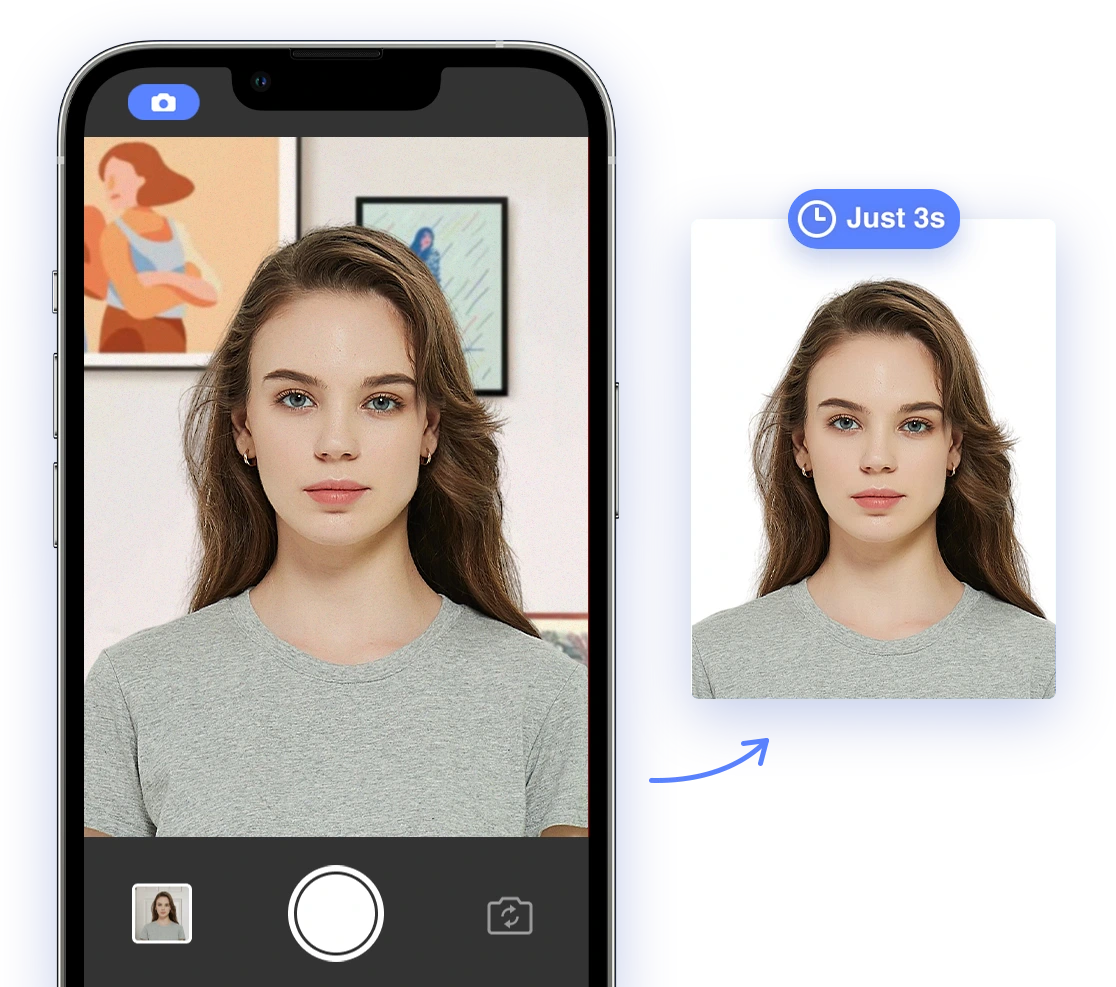
AI Passport Photo can significantly streamline the process of obtaining compliant photo IDs. Our AI-powered tool automatically checks your photo for compliance with specific requirements, including size, background, pose, and attire. It also provides real-time feedback and adjustments to help you create a perfect photo quickly and easily. Simplify the process with AI. For a better understanding of our tool, see our guide on
AI-Powered Photo Compliance.
Get started today and ensure your photo meets all the necessary standards for your important documents.
Troubleshooting Photo-Taking and Submission
Even with careful planning, you may encounter problems during the photo-taking and submission process. Here are some common issues and their solutions:
- File Size Limitations: Reduce the file size of your photo using a compression tool or image editor. Use compression tools for file size.
- Upload Errors: Check your internet connection and try uploading the photo again. If the problem persists, contact the website administrator for assistance. Check internet and contact admin if needed.
- Website Errors: If you encounter a website error, try clearing your browser cache and cookies or using a different browser. Clearing cache may help.
Conclusion
Navigating the world of photo ID requirements as a non-US citizen in the United States can be challenging, but by understanding the rules and utilizing the right resources, you can ensure a smooth and stress-free process. From USCIS documents and state-issued IDs to student IDs and travel documents, each has its own set of photo specifications. By following the guidelines outlined in this guide and leveraging tools like
AI Passport Photo, you can confidently obtain compliant photo IDs for all your official needs. A smooth process is possible with the right resources. For more uses of our tool, check our guide on
creative uses for AI passport photos.
Use AI Passport Photo to Create Compliant Photos Quickly and Easily