
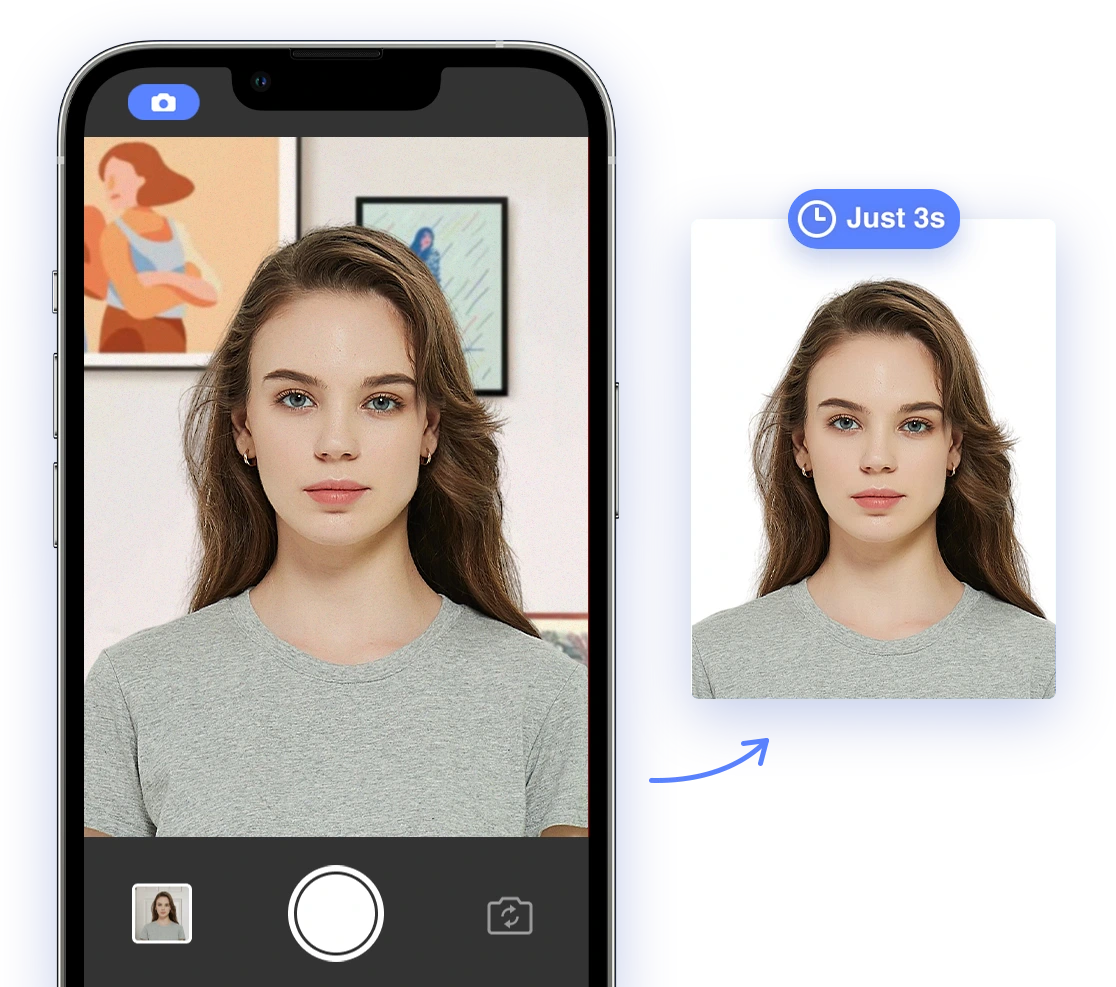
Applying for a US passport can feel overwhelming, especially when it comes to the photo. A rejected photo is one of the most common reasons for passport application delays, causing unnecessary stress and potentially disrupting your travel plans. But don't worry! This comprehensive guide will provide you with all the information you need to take a perfect passport photo that meets all the official requirements for 2024-2025, ensuring a smooth and stress-free application process.
We'll cover everything from understanding the basic requirements to DIY tips for taking a great photo at home. You'll also discover how to leverage AI-powered solutions for guaranteed compliance and what to do if, despite your best efforts, your photo is rejected.
If you're also interested in renewing your passport, check out our guide on Passport Renewal: FedEx vs USPS
Understanding the Basic Requirements for US Passport Photos
The US Department of State has strict guidelines for passport photos, and adhering to these requirements is crucial to avoid rejection. Think of it as a checklist for success. Here are the core elements you absolutely must get right:
- Size: The photo must be 2x2 inches (51x51 mm). This is a non-negotiable standard.
- Color: The photo must be in color. Black and white photos are not accepted. For more information, see our article on Black and White Passport Photos: Are They Accepted in the US? [2024-2025]
- Head Size: The head height (measured from the bottom of the chin to the top of the head, including hair) must be between 1 inch and 1 3/8 inches (25 mm and 35 mm). Getting this wrong is a frequent cause of rejection.
- Background: The photo must have a plain white or off-white background. Nothing else is acceptable. To learn more, read Decoding the US Passport Photo Background: Colors, Requirements & AI Solutions [2024-2025]
- Pose: You must face the camera directly, with a neutral facial expression or a natural smile. Think "pleasant and relaxed," not "grinning for a school photo."
- Eyes: Both eyes must be open and clearly visible. This seems obvious, but it's crucial. Glasses are generally not allowed (more on that later). For details, refer to Are Dark Eyes Acceptable in Passport Photos?
- Lighting: The photo must be evenly lit, with no shadows or glare. Uneven lighting is a very common cause of rejection.
- Quality: The photo must be clear, sharp, and in focus. Blurry photos are automatically rejected.
- Digital Alterations: The photo must not be digitally altered or retouched. This includes removing blemishes, whitening teeth, or altering your appearance in any way. For further reading, check out Passport Photo Retouching: What's Allowed & How AI Can Help [2024-2025]
DIY Tips for Taking a Great Photo at Home
Taking your passport photo at home can save you both time and money. However, it's essential to do it right. Here are some actionable tips and tricks to maximize your chances of success:
Setting Up Your Home Photo Studio
- Choose a Location: Find a well-lit area in your home that provides a plain white or off-white background. A blank wall works best, but you can also use a white sheet or poster board.
- Lighting is Key: Utilize natural light whenever possible. Position yourself facing a window, but avoid direct sunlight, which can cause harsh shadows. If you must use artificial light, ensure it's evenly distributed and doesn't create glare. Two softbox lights are ideal, but even a couple of well-positioned lamps can work.
- Get Help: Have someone take the photo for you. Selfies are generally not recommended because they can distort your features and make it difficult to maintain the correct pose and distance.
For additional tips, see our article on How to Take Passport Photo at Your Home: Do It Yourself
Posing and Attire
- Face the Camera: Face the camera directly, ensuring your head is level and your shoulders are relaxed. Imagine you're having your photo taken for a professional ID.
- Neutral Expression: Maintain a neutral facial expression or a natural smile. Think of it as a relaxed, pleasant look. Avoid exaggerated expressions like frowning, squinting, or wide, toothy grins.
- Appropriate Attire: Wear everyday clothing that you'd normally wear. Uniforms or clothing that resembles a uniform are not allowed. Avoid wearing white, as it can blend with the background. It's a good idea to wear a color that contrasts with white or off-white, such as blue, green, or black. For more information, check out Looking Your Best for Your U.S. Passport Photo What to Wear
Step-by-Step Instructions for a Compliant Photo
- Prepare Your Background: Double-check that your background is plain white or off-white and free of any patterns, textures, or distractions. Iron out any wrinkles if you're using a sheet.
- Position Yourself: Stand about 4 feet (1.2 meters) away from the background. This helps to minimize shadows.
- Lighting: Ensure that the lighting is even on your face and there are no harsh shadows. Adjust your position and light sources as needed.
- Take the Photo: Have your helper take the photo, ensuring your entire face is visible, in focus, and that you're following the posing guidelines. Take several shots to ensure you have options.
- Review the Photo: This is the most critical step! Check the photo to ensure it meets all the requirements. Is it clear, sharp, and evenly lit? Is your head the correct size and position? Is the background plain? Does your expression meet the requirements?
Common Mistakes to Avoid
Even with the best preparation, it's easy to make mistakes when taking your own passport photo. Being aware of these common pitfalls can save you from rejection:
- Poor Lighting: Shadows and glare are the most common cause for rejection. Strive for soft, even lighting across your face.
- Incorrect Background: The background must be plain white or off-white. Patterned backgrounds, walls with decorations, or even slightly off-color backgrounds will likely lead to rejection.
- Incorrect Pose: Failing to face the camera directly, tilting your head, or slouching can all lead to rejection. Practice your pose beforehand.
- Wearing Glasses: As of November 1, 2016, glasses are generally not allowed in passport photos. There are very limited medical exceptions where glasses might be permitted, but this requires a signed statement from a medical professional. It's best to avoid wearing glasses altogether. Check out Passport Photo with Glasses: Requirements, Tips & AI Solutions [2024-2025] for more details.
- Digital Alterations: Never digitally alter or retouch the photo. This includes removing blemishes, whitening teeth, smoothing skin, or altering your appearance in any way. The photo must be an accurate representation of your current appearance.
- Wearing Prohibited Items: Hats, headbands, or other items that obscure your hairline or facial features are not allowed unless worn daily for religious or medical reasons (and even then, documentation may be required). Be sure to check the specific requirements for your situation. To learn more, read Hats in Passport Photos: US Rules, Religious & Medical Exemptions, AI Solutions [2024-2025]
For more information on rejections, see What if my passport photo is rejected?
Leveraging AI-Powered Solutions for Guaranteed Compliance
While taking your passport photo at home can be cost-effective, ensuring 100% compliance can be tricky. That's where AI-powered passport photo tools come in. These tools simplify the process and provide an added layer of assurance.
How AI Tools Check for Compliance
AI algorithms analyze photos with incredible precision, checking for:
- Size and Dimensions: Ensuring the photo is exactly 2x2 inches (51x51 mm) and the head size falls within the specified range.
- Background: Verifying the background is the correct shade of white or off-white, and free of any patterns or objects.
- Lighting: Assessing the lighting to ensure it's even and free of shadows or glare.
- Facial Features: Ensuring the eyes are open and visible, the facial expression is neutral, and that all facial features are clearly visible.
By automatically checking these elements, AI tools significantly increase the likelihood of your photo being accepted on the first try.
AI Passport Photo and Other Similar Tools
- AI Passport Photo: Our tool allows you to easily upload a photo, and it automatically resizes, crops, and adjusts it to meet passport photo requirements. It also includes advanced features like background removal and checks for compliance with all official guidelines.
- Other AI-powered apps: Many other apps on iOS and Android provide similar services, often including features like clothing suggestions and instant validation. For example, see our guide on Tips for Capturing a Great Passport Photo Using Your iPhone in Just 3 Minutes
Using these tools can give you peace of mind knowing that your photo is highly likely to meet all the requirements.
How to Handle Unique Situations
Certain situations require special considerations when taking passport photos. Knowing these nuances can help you avoid unnecessary delays.
Infants and Children
- Infants: Lay the baby on a plain white or off-white sheet. Ensure there are no shadows on the baby's face. You can also hold the baby, but your hands must not be visible in the photo. A good trick is to have another person hold the sheet up behind you while you support the baby.
- Children: Children must face the camera directly with a neutral expression. It can be challenging to get young children to cooperate, so be patient and try to capture the photo when they are calm and relaxed. Using toys or rewards can sometimes help.
To learn more see Tips for Applying for Your Child's Passport: A Comprehensive Guide
Individuals with Disabilities
- Medical Devices: If you wear a medical device that cannot be removed, such as a hearing aid or prosthetic limb, it is generally allowed in the photo. However, it must not obstruct your face or create shadows.
- Head Coverings: Head coverings are allowed for religious or medical reasons, but they must not obscure your face. You may need to provide a signed statement verifying the reason for the head covering. Be sure to check the specific requirements for your situation.
What to Do If Your Photo Is Rejected
If your passport photo is rejected, don't panic! It happens more often than you might think. The rejection notice will typically explain the reason for the rejection.
- Carefully Review the Requirements: Read the rejection notice thoroughly and re-examine the official US Department of State guidelines.
- Identify the Issue: Pinpoint the specific reason for rejection. Was it the lighting, background, pose, or something else?
- Take a New Photo: Take a new photo, paying close attention to the identified issue. Use the DIY tips or an AI-powered tool to assist you.
- Consider Professional Help: If you're still having trouble, consider having your photo taken by a professional photographer who is experienced in taking passport photos.
Remember, a rejection isn't the end of the world. Just address the problem and try again!
Exploring Lesser-Known Travel Documents Beyond Passports & Visas
While a passport is essential for international air travel, it's worth noting that there are several alternative documents that can be used for specific border crossings and scenarios:
- U.S. Passport Card: This card is valid for land and sea travel between the U.S., Canada, Mexico, Bermuda, and the Caribbean. However, it cannot be used for international air travel.
- NEXUS Card: Provides expedited travel between the U.S. and Canada at designated border crossings for pre-approved, low-risk travelers.
- Military ID: U.S. military personnel on official travel can use their military ID for certain border crossings. Check the specific requirements based on your travel orders.
- Enhanced Driver's License (EDL): Accepted for land and sea border crossings between the U.S. and Canada, and the U.S. and Mexico (check specific state requirements for eligibility and restrictions).
It's important to remember that all of these documents, like passports, require a compliant photo. When preparing the photos for these documents, follow the same guidelines as for passport photos, but always check the specific requirements for each particular document to ensure full compliance.
Maximizing Your Compliant Photo for Global Opportunities
Your compliant passport or visa photo is a valuable asset beyond just travel! Here are some creative ways to utilize it:
- Secure Online Verification: Many online services use facial recognition for identity verification. A compliant photo can be useful for securely confirming your identity.
- Professional Licensing and Certifications: Many professional licenses and certifications require a compliant photo for identification purposes. Keep your digital copy handy!
- Personalized Gifts: Get creative and use your photo to create unique and personalized gifts, like mugs, t-shirts, or custom greeting cards.
- Genealogy Projects: Incorporate your photo into family history projects and create a visual record for future generations.
Conclusion
By understanding the US passport photo requirements and leveraging available resources, you can ensure a smooth and successful passport application process. Remember, a little preparation and attention to detail can go a long way. Whether you choose the DIY route with careful attention to the guidelines or opt for the convenience and assurance of AI-powered solutions, a perfect passport photo is within your reach. Start planning your next adventure with confidence!